Priligy (Dapoxetine) — Fast‑Acting On‑Demand PE Treatment Guide
Uses, mechanism, safety, and comparisons
Priligy is a short‑acting SSRI used for the treatment of premature ejaculation. It works by increasing serotonin activity in the nervous system, helping improve control over ejaculation and extend time to climax. This mechanism supports better sexual performance when needed.
Table of Contents
What is Priligy? Mechanism of Action Who Should Use It Neuropharmacology Pharmacokinetics & Rapid Clearance Onset & Duration for PE Control Behavioral & Psychological Factors Sexual Performance Suitability Profiles for PE Types Real‑World Use Scenarios Combination With Behavioral Techniques Alcohol & Stimulants Clinical Evidence Regulatory Status Storage & Stability Drug Interactions (CNS) How to Buy Online FAQWhat is Priligy?
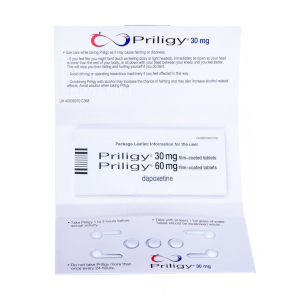
Priligy is a medication used for the treatment of premature ejaculation in adult men. Its active ingredient is dapoxetine, a short‑acting selective serotonin reuptake inhibitor (SSRI) developed specifically for on‑demand use rather than daily therapy. Priligy is taken before anticipated sexual activity to help improve control over ejaculation.
Dapoxetine differs from traditional SSRIs because it is absorbed and eliminated rapidly, making it suitable for event‑based dosing. The medication is part of a broader therapeutic approach aimed at managing ejaculation timing and enhancing sexual confidence. It is typically prescribed after a clinical evaluation to determine whether it is appropriate for the individual’s health profile.
Mechanism of Action
Priligy works by inhibiting the reuptake of serotonin, a neurotransmitter involved in regulating mood and certain reflex pathways, including those related to ejaculation. By increasing serotonin activity in specific neural circuits, the medication helps delay the ejaculatory reflex during sexual stimulation.
This leads to improved control over ejaculation and an extended time to climax. The mechanism supports natural physiological processes rather than creating arousal, making it effective only when sexual stimulation occurs.
Who Should Use It
Priligy may be suitable for adult men experiencing persistent or recurrent premature ejaculation, particularly those who benefit from an on‑demand medication that enhances control. It can be considered by individuals with mild to moderate symptoms who have discussed treatment options with a healthcare professional.
However, Priligy is not appropriate for everyone. It may be unsuitable for individuals with certain heart conditions, significant liver impairment, or those taking medications that interact with serotonin pathways. Men with a history of fainting or specific psychiatric conditions should also undergo careful evaluation. A medical consultation is essential to confirm suitability and ensure safe, appropriate use.
Neuropharmacology of Priligy (Dapoxetine)
Priligy’s neuropharmacological profile is defined by dapoxetine, an ultrashort‑acting modulator of serotonergic transmission belonging to the class of SSRIs. Unlike conventional SSRIs designed for chronic mood regulation, dapoxetine is engineered for rapid CNS penetration and transient enhancement of synaptic serotonin. Its primary target is the serotonin transporter (SERT), where it acts as a reversible inhibitor, increasing extracellular serotonin levels in key neural circuits involved in ejaculatory control.
The drug’s functional effect is concentrated within the brainstem’s raphe nuclei and their projections to spinal ejaculation centers. Elevated serotonergic tone strengthens inhibitory signaling within these pathways, delaying activation of the spinal ejaculatory reflex. This results in increased IELT (intravaginal ejaculation latency time), improved perceived control, and reduced ejaculatory urgency. Because dapoxetine does not induce long‑term receptor adaptation, its effect remains strictly on‑demand and does not require daily administration.
| Neuropharmacological Parameter | Characteristic |
|---|---|
| Primary target | SERT (serotonin transporter) |
| Mechanism | Reversible inhibition → ↑ synaptic serotonin |
| Functional domain | Brainstem raphe nuclei → spinal ejaculation centers |
| Clinical effect | Enhanced inhibitory control of the ejaculatory reflex |
| On‑demand suitability | No receptor downregulation; no chronic adaptation |
These neuropharmacological properties make Priligy the only SSRI optimized specifically for acute, event‑driven control of premature ejaculation, rather than long‑term mood modulation.
Pharmacokinetics & Rapid Clearance of Priligy (Dapoxetine)
Priligy’s pharmacokinetic profile is unique among SSRIs, characterized by rapid absorption, high early‑phase bioavailability, and exceptionally fast elimination. After oral administration, dapoxetine reaches effective CNS concentrations within 1–2 hours, enabling its use as an on‑demand therapy. This rapid Tmax is a key differentiator from traditional SSRIs, which require weeks of continuous dosing to achieve therapeutic effects.
Dapoxetine is metabolized primarily via CYP2D6 and CYP3A4, producing significant inter‑individual variability in onset intensity and duration. Its short elimination half‑life (6–8 hours) prevents accumulation, minimizes long‑term serotonergic adaptation, and reduces the risk of chronic SSRI‑related adverse effects. Excretion occurs through both renal and fecal pathways, with no clinically relevant build‑up during repeated episodic use.
| Pharmacokinetic Parameter | Characteristic |
|---|---|
| Absorption | Rapid; high early‑phase systemic availability |
| Tmax | ~1–2 hours |
| Metabolism | CYP2D6 / CYP3A4 pathways |
| Elimination half‑life | 6–8 hours (shortest among SSRIs) |
| Accumulation | None; optimized for on‑demand dosing |
| Excretion | Renal and fecal routes |
This pharmacokinetic architecture explains why Priligy provides fast, controlled, and time‑limited modulation of ejaculatory reflex pathways, making it uniquely suited for episodic management of premature ejaculation.
Onset & Duration for PE Control (Priligy / Dapoxetine)
The onset and duration of Priligy reflect dapoxetine’s ultrafast pharmacokinetic profile, which distinguishes it from conventional SSRIs used for chronic mood regulation. After oral administration, dapoxetine rapidly reaches effective CNS concentrations, enabling acute modulation of serotonergic pathways involved in ejaculatory control. This rapid engagement supports its use as an on‑demand therapy for premature ejaculation.
The functional effect emerges as serotonergic inhibition strengthens within brainstem and spinal circuits responsible for coordinating the ejaculatory reflex. Because dapoxetine does not accumulate or induce long‑term receptor adaptation, its action remains time‑limited and predictable across episodic use.
| Timing Parameter | Characteristic |
|---|---|
| Initial CNS engagement | ~30–60 minutes after administration |
| Peak functional effect | 1–3 hours post‑dose |
| Functional duration | Approximately 4–6 hours |
| Variability drivers | CYP2D6/CYP3A4 metabolism, stress, arousal dynamics |
| Accumulation | None; effect dissipates within 24 hours |
This timing profile explains why Priligy provides rapid, controlled, and time‑bounded modulation of ejaculatory reflex pathways, optimized for event‑driven PE management.
Behavioral & Psychological Factors Influencing Priligy Response
Priligy’s effectiveness is shaped not only by dapoxetine’s pharmacology but also by behavioral and psychological factors that influence central regulation of ejaculation. Premature ejaculation often involves a combination of neurobiological, emotional, and cognitive components. Dapoxetine enhances inhibitory serotonergic signaling, but the real‑world outcome depends on the user’s psychological state and behavioral patterns during sexual activity.
Key influences include performance‑related anxiety, stress reactivity, attentional focus, and habitual arousal patterns. These factors modulate how effectively increased serotonergic tone translates into perceived control and extended latency.
- Performance anxiety — heightened sympathetic activation may counteract inhibitory serotonergic effects.
- Stress load — elevated stress can accelerate reflex pathways involved in ejaculation.
- Attentional focus — excessive focus on timing or outcome may intensify reflexive responses.
- Arousal regulation — difficulty modulating arousal intensity can shorten latency despite pharmacological support.
- Conditioned behavioral patterns — long‑standing rapid‑response patterns may influence perceived control.
- Sleep and emotional balance — affect neurotransmitter regulation and stress resilience.
These behavioral and psychological factors help explain why Priligy performs best in contexts of reduced anxiety, stable arousal, and supportive emotional conditions.
Sexual Performance Context for Priligy (Dapoxetine)
The sexual performance context plays a central role in how Priligy’s effects manifest. Because dapoxetine enhances central inhibitory control without altering peripheral erectile physiology, its impact depends on the dynamics of arousal, emotional comfort, and partner interaction. Priligy does not influence erection quality or PDE5‑mediated pathways; instead, it modulates the timing and regulation of the ejaculatory reflex.
In real‑world scenarios, users often report improved subjective control, reduced urgency, and greater ability to manage the pace of sexual activity. These outcomes arise from the interplay between dapoxetine’s neurochemical effects and situational factors such as communication, emotional safety, and environmental comfort.
- Partner communication — supportive dynamics can reduce anxiety and enhance perceived control.
- Arousal pacing — the ability to regulate arousal intensity influences how effectively serotonergic modulation is expressed.
- Confidence feedback — positive experiences may reinforce emotional stability and improve subsequent outcomes.
- Stimulation intensity — high‑intensity stimulation may shorten the effective window of control.
- Environmental comfort — comfortable, low‑stress settings support optimal neurochemical response.
These contextual elements illustrate how Priligy’s pharmacological action integrates with psychological and interpersonal factors to shape real‑world PE management outcomes.
Suitability Profiles for Different PE Types (Priligy / Dapoxetine)
Priligy’s suitability varies across premature ejaculation subtypes due to differences in neurobiological drivers, serotonergic sensitivity, and behavioral conditioning. As an ultrashort‑acting SSRI modulator, dapoxetine enhances inhibitory serotonergic tone in neural circuits governing ejaculatory reflex timing. Its effect is strongest when PE is linked to reduced central inhibition rather than structural or endocrine factors.
Suitability profiles reflect clinical and observational patterns rather than individualized recommendations, highlighting where dapoxetine’s mechanism aligns with underlying PE physiology.
- Lifelong PE — typically associated with low baseline serotonergic inhibition; dapoxetine often produces strong IELT improvements.
- Acquired PE — effectiveness depends on contributing factors such as stress, anxiety, or relationship dynamics.
- PE with high anxiety load — dapoxetine may help, but psychological factors can modulate perceived control.
- PE with normal erectile function — ideal profile, as dapoxetine does not influence PDE5‑mediated pathways.
- PE linked to hyperarousal patterns — dapoxetine supports central inhibition but outcomes vary with arousal regulation.
- PE with comorbid mood disorders — response may differ due to serotonergic variability.
These suitability patterns illustrate where Priligy’s neurochemical action aligns most effectively with PE pathophysiology.
Real‑World Use Scenarios for Priligy (Dapoxetine)
Real‑world use of Priligy reflects its rapid onset, short duration, and targeted modulation of ejaculatory reflex pathways. Because dapoxetine does not accumulate or alter long‑term receptor sensitivity, its effect is tightly linked to situational factors such as arousal pacing, emotional comfort, and partner interaction. These contextual elements shape how serotonergic enhancement translates into perceived control.
Users commonly report improved latency, reduced urgency, and greater ability to regulate the tempo of sexual activity. These outcomes emerge from the interplay between dapoxetine’s pharmacology and the behavioral environment in which it is used.
- Planned sexual activity — aligns with dapoxetine’s predictable 1–3 hour peak window.
- Situations requiring acute control — rapid onset supports event‑driven use.
- Stable emotional context — reduced stress enhances serotonergic inhibitory effects.
- Partner‑supported scenarios — communication and comfort improve subjective control.
- Variable arousal intensity — high stimulation may shorten the effective control window.
- Intermittent use — ideal due to lack of accumulation and rapid clearance.
These real‑world patterns highlight how Priligy’s pharmacology integrates with situational and emotional factors to shape PE management outcomes.
Combination With Behavioral Techniques (Priligy / Dapoxetine)
Priligy’s neurochemical action interacts with behavioral mechanisms that influence ejaculatory control. Because premature ejaculation often involves both neurobiological and conditioned behavioral components, dapoxetine’s serotonergic modulation can complement non‑pharmacological strategies that target arousal regulation, attentional focus, and reflex sensitivity. These combinations do not alter dapoxetine’s mechanism but may enhance the consistency of its effect.
Behavioral approaches influence cognitive and emotional pathways that shape how serotonergic inhibition is expressed during sexual activity. When combined with dapoxetine’s rapid CNS engagement, these factors may support more stable control across varying contexts.
- Arousal pacing strategies — help regulate the rate of excitatory buildup.
- Cognitive reframing — reduces performance‑related anxiety that can counteract serotonergic inhibition.
- Attention modulation — shifting focus away from timing reduces reflexive urgency.
- Emotional regulation — stable emotional states support consistent latency extension.
- Partner communication — reduces stress and enhances perceived control.
These behavioral elements complement Priligy’s pharmacological action by shaping the psychological and cognitive environment in which ejaculatory reflex modulation occurs.
Alcohol & Stimulants Context for Priligy (Dapoxetine)
The interaction profile of Priligy differs fundamentally from PDE5 inhibitors because dapoxetine acts on central serotonergic pathways rather than peripheral vascular mechanisms. Alcohol and stimulants influence neurotransmission, arousal regulation, and autonomic balance, all of which shape how serotonergic modulation is expressed during sexual activity. These substances do not alter dapoxetine’s mechanism as a short‑acting SSRI modulator, but they can affect the behavioral and neurophysiological environment in which ejaculatory control occurs.
Alcohol primarily affects cortical inhibition, emotional regulation, and sympathetic tone, while stimulants influence arousal intensity, attention, and reflex sensitivity. These factors may shift perceived latency, urgency, and control even when serotonergic inhibition is pharmacologically enhanced.
- Alcohol (moderate) — may reduce anxiety but can also impair arousal regulation and shorten latency.
- Alcohol (high intake) — increases sympathetic activation and reduces the consistency of serotonergic inhibitory effects.
- Caffeine — may elevate arousal intensity and accelerate reflex pathways.
- Nicotine — influences autonomic balance and may reduce perceived control.
- Recreational stimulants — can significantly alter central arousal circuits and overshadow serotonergic modulation.
- Sleep deprivation — amplifies stimulant‑like effects and reduces emotional regulation.
These interactions highlight how alcohol and stimulants shape the neurobehavioral context in which Priligy’s serotonergic modulation operates.
Clinical Evidence for Priligy (Dapoxetine)
Priligy is supported by a robust clinical evidence base demonstrating significant improvements in IELT, perceived control, and reduction of PE‑related distress. Unlike chronic SSRIs, dapoxetine’s ultrafast pharmacokinetics allow it to produce clinically meaningful effects after a single dose, making it the only SSRI optimized for on‑demand use. Trials consistently show that dapoxetine enhances inhibitory serotonergic signaling within brainstem and spinal circuits, delaying activation of the ejaculatory reflex.
Across randomized controlled studies, dapoxetine demonstrates efficacy in both lifelong and acquired PE, with improvements observed across diverse age groups and relationship contexts. Safety profiles indicate transient, dose‑dependent effects consistent with short‑acting serotonergic modulation.
| Clinical Endpoint | Observed Outcome |
|---|---|
| IELT improvement | Significant increase vs placebo across all PE subtypes |
| Perceived control | Marked improvement in subjective control and reduced urgency |
| Distress reduction | Lower PE‑related anxiety and frustration |
| Onset consistency | Rapid effect within 1–3 hours after dosing |
| Safety profile | Transient CNS‑related effects; no long‑term accumulation |
These findings position Priligy as a clinically validated, fast‑acting therapy for episodic management of premature ejaculation.
Regulatory Status of Priligy (Dapoxetine)
Priligy holds a unique regulatory position as the first and only dapoxetine‑based therapy specifically approved for premature ejaculation in multiple regions. Its classification reflects its role as an ultrashort‑acting serotonergic modulator rather than a chronic antidepressant. Regulatory agencies evaluate dapoxetine based on its rapid onset, short duration, and targeted mechanism of action within ejaculatory control pathways.
Approval status varies globally, with some regions authorizing both branded Priligy and generic dapoxetine formulations. Prescription requirements remain consistent due to dapoxetine’s CNS activity and interaction profile involving serotonergic pathways and CYP‑mediated metabolism.
| Regulatory Aspect | Status |
|---|---|
| Primary indication | Premature ejaculation (PE) |
| Drug class | Short‑acting SSRI modulator |
| Approval regions | Approved in EU, parts of Asia, and other markets |
| Prescription status | Prescription‑only due to CNS activity |
| Generic availability | Generic dapoxetine authorized in several regions |
| Regulatory rationale | Rapid onset, short half‑life, PE‑specific mechanism |
These regulatory characteristics establish Priligy as a globally recognized, PE‑specific therapy with a distinct pharmacological and approval profile.
Storage & Stability of Priligy (Dapoxetine)
The storage and stability profile of Priligy reflects the physicochemical characteristics of dapoxetine, a short‑acting SSRI modulator sensitive to moisture, heat, and prolonged light exposure. Maintaining appropriate environmental conditions preserves tablet integrity, prevents degradation of the active ingredient, and ensures predictable pharmacokinetic behavior during on‑demand use. Although dapoxetine is chemically stable under standard conditions, deviations in temperature or humidity may alter dissolution rates and delay CNS engagement.
Priligy does not require refrigeration or specialized storage, but adherence to standard pharmaceutical handling practices supports consistent performance. Original blister packaging provides moisture protection and should remain intact until use.
| Storage Parameter | Recommended Condition |
|---|---|
| Temperature | 20–25°C (68–77°F); avoid excessive heat |
| Humidity | Store in a dry environment; avoid damp areas |
| Light exposure | Protect from direct sunlight and UV exposure |
| Packaging | Keep tablets in original blister until use |
| Handling | Avoid contact with wet hands |
| Stability | Stable under standard room conditions |
These storage and stability parameters help maintain Priligy’s rapid onset and predictable short‑acting profile.
Drug Interactions (CNS‑Focused) for Priligy (Dapoxetine)
Priligy’s interaction profile is shaped by dapoxetine’s role as a central serotonergic modulator. Unlike PDE5 inhibitors, which interact primarily through vascular pathways, dapoxetine’s interactions involve neurotransmission, serotonin metabolism, and autonomic regulation. The most clinically relevant categories include serotonergic agents, CNS depressants, and substances affecting CYP2D6 or CYP3A4 metabolism.
These interactions do not alter dapoxetine’s mechanism but may influence plasma concentration, CNS effects, or the balance between excitatory and inhibitory neural pathways involved in ejaculatory control.
| Interaction Category | General Effect |
|---|---|
| Serotonergic agents (SSRIs, SNRIs, MAOIs) | May increase serotonergic load; theoretical risk of excessive CNS inhibition |
| CNS depressants | Potential additive effects on alertness and autonomic balance |
| CYP2D6 inhibitors | May increase dapoxetine exposure and prolong effect |
| CYP3A4 inhibitors | May elevate plasma levels and intensify CNS effects |
| CYP inducers | May reduce systemic exposure and shorten functional duration |
| Alcohol | May alter arousal regulation and sympathetic tone |
| Stimulants | May increase arousal intensity and reduce latency despite serotonergic modulation |
These CNS‑focused interaction patterns highlight the neurochemical and metabolic factors that shape Priligy’s real‑world performance.
How to Buy Priligy (Dapoxetine) Online
Priligy’s online availability reflects its regulatory classification as a short‑acting therapy for premature ejaculation. In regions where dapoxetine is approved, Priligy and generic dapoxetine formulations may appear on licensed online pharmacy platforms operating under local prescription requirements. Availability varies across markets due to differences in regulatory frameworks, digital pharmacy infrastructure, and prescription verification systems.
Online listings typically present Priligy within men’s sexual health categories, emphasizing its rapid onset, short duration, and PE‑specific mechanism. Commercial positioning focuses on its role as an on‑demand serotonergic modulator rather than a chronic antidepressant.
| Commercial Aspect | General Context |
|---|---|
| Market positioning | PE‑specific short‑acting SSRI modulator |
| Distribution model | Licensed online pharmacies in approved regions |
| Regulatory variability | Prescription‑only in most jurisdictions |
| Brand vs generic | Both Priligy and generic dapoxetine may be listed |
| Commercial presentation | Highlighted for rapid onset and on‑demand use |