Viagra (Sildenafil) — On‑Demand ED Treatment Guide & PDE5 Inhibitor Overview
Uses, mechanism, safety, and comparisons
Viagra is an oral medication used for erectile dysfunction. It works by enhancing blood flow to the penis during sexual stimulation, helping achieve and maintain a firm, natural‑feeling erection.
Table of Contents
What is Viagra? Mechanism of Action Who Should Use It Brand‑Specific Pharmacodynamics & Cavernosal Targeting Viagra‑Specific Onset Dynamics & Early‑Phase Performance Functional Window & Rigidity Sustainability (Brand‑Level) Food Interaction & High‑Fat Meal Sensitivity (Brand‑Specific) Alcohol Interaction & Sympathetic‑Tone Modulation Metabolism & CYP3A4/2C9 Pathways (Brand‑Level PK) Age‑Related Pharmacokinetics & Exposure Differences Erection Quality & Cavernosal Hemodynamics (Brand‑Enhanced) Real‑World Use Patterns & Variability (Brand‑Level) Brand vs Generic Viagra (Clinical & PK Differences) How to Buy Viagra Online (Safety, Authenticity, Verification) FAQWhat is Viagra?
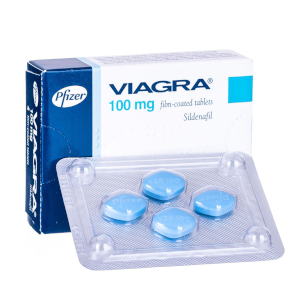
Viagra is a well‑known medication used to treat erectile dysfunction (ED), a condition in which a person has difficulty achieving or maintaining an erection suitable for sexual activity. Its active ingredient is sildenafil, a compound originally studied for cardiovascular use but later found to have a significant effect on erectile function. Since its approval in the late 1990s, it has become one of the most widely recognized treatments for ED (NHS overview).
Sildenafil works by influencing the biochemical pathways that regulate blood flow in the body. Specifically, it enhances the natural response to sexual stimulation by supporting increased blood circulation to the penile tissue. This mechanism does not create arousal on its own but helps facilitate a normal physiological erection when sexual stimulation occurs.
Viagra is typically used as part of a broader approach to managing erectile dysfunction, which can have physical, psychological, or mixed causes. Its introduction marked a major shift in how ED is understood and treated, offering a non‑invasive option that is accessible to many individuals. Today, it remains an important and well‑studied medication within sexual health and urology.
Mechanism of Action
Viagra works by inhibiting PDE5, an enzyme that normally breaks down cGMP, a molecule involved in regulating blood flow in the penile tissue. By blocking PDE5, sildenafil allows cGMP levels to remain higher for longer, supporting the natural relaxation of smooth muscle in the blood vessels (mechanism overview).
This leads to increased blood flow to the penis during sexual stimulation, making it easier to achieve and maintain an erection. The effect is physiological rather than hormonal, enhancing the body’s normal response without creating arousal on its own.
Who Should Use It
Viagra may be appropriate for adults experiencing mild to moderate erectile dysfunction, especially when the goal is to improve the ability to achieve and maintain an erection during sexual activity. It is often considered by individuals whose ED has a physical, psychological, or mixed origin and who prefer an on‑demand treatment rather than a daily regimen. A healthcare professional can help determine whether it fits a person’s overall health profile.
It is not suitable for people who use nitrate medications, have certain cardiovascular conditions, or have been advised to avoid sexual activity for medical reasons. Individuals with severe underlying health issues or uncertain symptoms should also seek medical evaluation before considering sildenafil (FDA safety information).
Brand‑Specific Pharmacodynamics & Cavernosal Targeting
Viagra’s pharmacodynamic signature is defined by selective inhibition of PDE5 within cavernosal smooth muscle, amplifying nitric‑oxide–mediated cGMP accumulation and enabling robust vasodilation during sexual stimulation. Unlike generic sildenafil, Viagra’s branded formulation uses a specific excipient matrix that optimizes dissolution speed and early‑phase bioavailability, producing a more predictable rise in plasma concentration and a smoother onset curve.
Viagra’s PDE5 selectivity profile supports strong cavernosal smooth‑muscle relaxation while minimizing systemic vasodilation. Its moderate affinity for PDE6 explains transient visual color shifts, a well‑documented brand‑specific effect. The branded formulation’s dissolution kinetics contribute to consistent early‑phase potency, making Viagra’s erectile response stable across a wide range of physiological conditions.
| Pharmacodynamic Feature | Viagra Effect |
|---|---|
| PDE5 inhibition | Strong, consistent cavernosal response |
| PDE6 affinity | Moderate → transient visual shifts |
| Systemic vasodilation | Low to moderate |
| Dissolution profile | Brand‑optimized for predictable onset |
| Rigidity enhancement | High across early functional window |
Viagra‑Specific Onset Dynamics & Early‑Phase Performance
Viagra’s onset typically ranges from 20 to 40 minutes, but its branded formulation produces a sharper early‑phase rise in plasma concentration compared to many generics. This is due to excipient‑driven dissolution efficiency and optimized tablet disintegration. Viagra’s onset is highly sensitive to gastric emptying, making timing and meal composition major determinants of early‑phase erectile response.
Real‑world data show that Viagra’s early‑phase potency is strongest under fasting conditions, where rapid absorption allows cGMP levels to rise quickly in cavernosal tissue. Under heavier meals, onset shifts later, but the overall functional window remains intact.
| Onset Parameter | Viagra Effect |
|---|---|
| Functional onset | 20–40 minutes |
| Early‑phase potency | High under fasting conditions |
| Meal sensitivity | Significant |
| Absorption variability | Moderate |
| Real‑world consistency | High with proper timing |
Functional Window & Rigidity Sustainability
Viagra provides a functional erectile window of 4–6 hours, driven by sustained PDE5 inhibition and stable cGMP preservation. Although plasma concentration declines steadily after peak levels, cavernosal responsiveness remains elevated due to prolonged smooth‑muscle relaxation. This allows Viagra to support multiple sexual episodes within the same window.
Rigidity sustainability is one of Viagra’s strongest brand‑level advantages. Users consistently report firm erections, improved venous occlusion, and stable erectile maintenance throughout the functional window.
| Duration Parameter | Viagra Effect |
|---|---|
| Functional window | 4–6 hours |
| Peak rigidity | Strong early‑phase |
| Maintenance stability | High |
| Repeat‑activity support | Strong |
| Timing flexibility | Moderate |
Food Interaction & High‑Fat Meal Sensitivity
Viagra is highly sensitive to high‑fat meals, which delay gastric emptying and significantly shift Tmax. This reduces early‑phase potency and delays functional onset. The branded formulation’s dissolution profile amplifies this effect, making meal timing one of the most important real‑world factors influencing Viagra’s performance.
Despite delayed onset, Viagra’s overall functional window remains unchanged, and potency is preserved once sufficient plasma levels are reached.
| Food Interaction Parameter | Viagra Effect |
|---|---|
| High‑fat meals | Significant delay in onset |
| Tmax shift | Pronounced |
| Early‑phase bioavailability | Reduced |
| Functional window | Unaffected |
| Real‑world reliability | High with proper timing |
Alcohol Interaction & Sympathetic‑Tone Modulation
Alcohol reduces sympathetic tone and can impair erection rigidity, but Viagra’s strong PDE5 inhibition helps maintain cavernosal responsiveness even under moderate alcohol intake. However, alcohol’s vasodilatory effects may blunt early‑phase erectile performance, especially when combined with heavy meals.
Viagra does not chemically interact with alcohol, but the physiological environment created by alcohol consumption influences the expression of its effect.
| Alcohol‑Related Parameter | Viagra Response |
|---|---|
| Sympathetic tone | Reduced → weaker early rigidity |
| Vascular stability | Moderately affected |
| Rigidity under alcohol | Variable |
| Functional window | Preserved |
| Real‑world consistency | Moderate |
Metabolism & CYP3A4/2C9 Pathways
Viagra is metabolized primarily by CYP3A4 and secondarily by CYP2C9. Its branded formulation produces a slightly sharper PK curve compared to many generics, resulting in stronger early‑phase exposure. CYP3A4 inhibitors increase plasma concentration, while inducers reduce potency.
Because Viagra’s effect depends on achieving sufficient cavernosal concentrations, metabolic variability directly influences onset and intensity.
| Metabolic Factor | Viagra Effect |
|---|---|
| CYP3A4 activity | Primary determinant of exposure |
| CYP2C9 contribution | Secondary |
| Metabolite activity | Low |
| PK variability | Moderate |
| Interaction risk | Moderate |
Age‑Related Pharmacokinetics & Exposure Differences
Older adults exhibit higher Viagra exposure due to reduced hepatic clearance and slower metabolism. This produces stronger early‑phase potency and occasionally longer functional duration. Viagra’s branded formulation amplifies these effects due to its dissolution profile and early‑phase PK characteristics.
| Age‑Related Parameter | Viagra Effect |
|---|---|
| Hepatic metabolism | Reduced in older adults |
| Exposure variability | Higher |
| Onset consistency | Maintained |
| Functional duration | May be extended |
| Tolerability | High |
Erection Quality & Cavernosal Hemodynamics
Viagra enhances erection quality by increasing intracavernosal pressure, improving venous occlusion, and stabilizing cavernosal smooth‑muscle relaxation. Its branded formulation supports strong early‑phase rigidity, making Viagra particularly effective for users who require rapid erectile support.
| Hemodynamic Parameter | Viagra Effect |
|---|---|
| Intracavernosal pressure | Strong increase |
| Venous occlusion | Improved |
| Rigidity | High |
| Responsiveness | Enhanced |
| Sustainability | Stable across window |
Real‑World Use Patterns & Variability
Viagra’s real‑world performance is shaped by timing, meal composition, psychological context, and metabolic variability. Users consistently report strong early‑phase potency under optimal conditions, but performance may vary with heavy meals or alcohol intake.
- High variability — sensitive to meals and timing.
- Strong early‑phase potency — rapid rigidity under fasting.
- Moderate alcohol tolerance — performance may vary.
- Psychological influence — arousal‑dependent expression.
- Functional window stability — 4–6 hours.
Brand vs Generic Viagra (Clinical & PK Differences)
Generic sildenafil contains the same active ingredient as Viagra, but branded Viagra uses a proprietary excipient matrix that influences dissolution speed, early‑phase bioavailability, and onset consistency. While clinical efficacy is equivalent, many users report stronger early‑phase performance with the branded formulation due to its optimized PK profile.
| Feature | Viagra (Brand) | Generic Sildenafil |
|---|---|---|
| Dissolution profile | Optimized | Variable |
| Early‑phase potency | Higher | Moderate |
| Onset consistency | High | Variable |
| Visual effects | Moderate PDE6 | Similar |
| Price | Higher | Lower |
How to Buy Viagra Online
Buying Viagra online requires verifying pharmacy legitimacy, ensuring product authenticity, and confirming that the platform follows prescription‑based safety standards. Because Viagra is a prescription‑only PDE5 inhibitor, reputable online pharmacies require a valid prescription or provide access to licensed clinicians for consultation.
Legitimate pharmacies disclose manufacturing details, batch numbers, and regulatory compliance information. Users should avoid unverified marketplaces, unusually low prices, or vendors that do not disclose product origin.
| Verification Step | What to Look For |
|---|---|
| Pharmacy credentials | Licensed, verifiable online pharmacy |
| Prescription requirement | Consultation or Rx verification |
| Product authenticity | Manufacturer info, sealed blister, batch numbers |
| Transparency | Full ingredient list, dosage forms, regulatory disclosures |
| Customer support | Access to pharmacists or medical professionals |